Im Qualitätsmanagement im Maschinenbau ist ein funktionierendes Qualitätsmanagementsystem ein entscheidender Faktor für Wettbewerbsfähigkeit, Liefersicherheit und Kundenzufriedenheit. Viele Unternehmen orientieren sich dabei an international anerkannten Standards wie der ISO 9001. Ein zentraler Bestandteil dieser Norm ist die regelmäßige Durchführung von internen Audits, mit denen überprüft wird, ob Prozesse wirksam umgesetzt werden und den definierten Anforderungen entsprechen.
Gerade im Maschinenbau sind die Prozesse häufig komplex: von der Entwicklung kundenspezifischer Anlagen über Konstruktion und Fertigung bis hin zu Montage, Inbetriebnahme und Service. Interne Audits helfen dabei, diese Abläufe systematisch zu überprüfen, Verbesserungspotenziale zu erkennen und Risiken frühzeitig zu vermeiden. Ein erfahrener externer Auditor kann dabei unterstützen, Prozesse unabhängig zu bewerten und zusätzliche Impulse für die Optimierung des Qualitätsmanagementsystems zu liefern.
Typische Auditbereiche im Maschinenbau sind unter anderem:
- Entwicklungs- und Konstruktionsprozesse
- Fertigungs- und Montageprozesse
- Dokumentations- und Änderungsmanagement
- Lieferantenmanagement und Wareneingangsprüfung
- Projektmanagement bei kundenspezifischen Anlagen
Durch regelmäßige interne Audits wird sichergestellt, dass das Qualitätsmanagementsystem nicht nur formal vorhanden ist, sondern im operativen Alltag tatsächlich gelebt wird. Gleichzeitig dienen Audits als wichtiges Instrument der kontinuierlichen Verbesserung und helfen, Prozessqualität sowie Effizienz im Maschinenbau langfristig zu sichern.
Challenges of Internal Audits in Mechanical Engineering
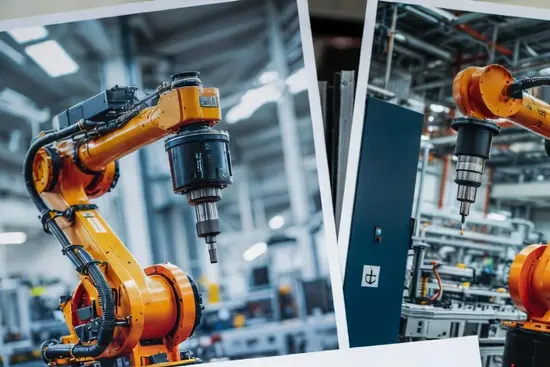
Internal audits are an essential tool in quality management for regularly reviewing the effectiveness of processes and systematically identifying improvement potentials. In practice, however, conducting internal audits in mechanical engineering is often associated with various organizational and technical challenges. The requirements for audit programs are clearly defined by standards such as ISO 9001: audits must be planned, documented, conducted independently, and repeated regularly. At the same time, they must dive deep enough into processes to identify actual weaknesses.
In many mechanical engineering companies, internal audits are conducted by employees who perform these tasks in addition to their regular responsibilities. This can lead to several challenges:
- limited time resources for planning and execution
- lack of audit experience or methodological knowledge
- restricted independence regarding own processes
- operational blindness to established workflows
Especially in the case of growing company size, new production sites, or increasing customer requirements, it can therefore be advisable to involve an external auditor.
Benefits of an External Auditor
An external auditor in mechanical engineering brings an independent perspective and experience from numerous audits in different companies. In mechanical engineering, this external viewpoint can provide significant added value.
With an external perspective, it is possible to:
- identify process weaknesses more objectively
- detect typical deviations at an early stage
- transfer best practices from other companies
- structure audit programs efficiently
- relieve internal quality managers
In addition, audit findings are often more widely accepted, as they are evaluated by a neutral party. This allows improvement measures to be implemented faster and enhances the effectiveness of the quality management system.
Typical Applications for External Audits in Mechanical Engineering
In mechanical engineering, external audit support is particularly useful when:
- a certification or surveillance audit is upcoming
- internal resources for audits are insufficient
- new processes or production areas are being introduced
- suppliers need to be evaluated more intensively
- the existing audit program needs to be further developed
External auditors can also assist in supplier evaluations to ensure that suppliers reliably meet the required quality standards.
Process of an Externally Supported Internal Audit
A structured internal audit conducted by an external auditor in mechanical engineering follows several clearly defined steps:
1. Audit Planning
Definition of the audit scope, the processes to be reviewed, and the audit program.
2. Analysis of Existing QMS Documentation
Review of process descriptions, work instructions, key performance indicators, and previous audit reports.
3. Audit Execution on Site
Interviews with process owners, inspections of production and assembly areas, and spot checks of documentation.
4. Evaluation and Audit Report
Documentation of deviations, improvement potentials, and recommendations.
5. Support in Implementing Improvement Measures
Derivation of concrete steps to optimize processes and structures.
Internal Audits as a Tool for Process Improvement
When used correctly, internal audits in mechanical engineering are far more than a formal requirement. They enable a systematic analysis of the entire value chain—from development through production to customer service.
The combination of internal expertise and external audit knowledge creates a powerful instrument for continuous improvement. Companies benefit not only from more stable process quality but also from better preparation for customer requirements and certification audits.
In this way, internal audits become a key component for sustainable quality, efficient operations, and long-term business success in mechanical engineering.
PeRoBa Quality Management from Munich – Customized Quality Management in Mechanical Engineering
Consulting, Implementation, Audits, and QMS Tools from a Single Source
PeRoBa GmbH Munich is a service provider with many years of experience in quality management, specifically in the automotive
and mechanical engineering sectors. We assist with all major standards (ISO 9001, VDA 6.3, IATF 16949, etc.) on the path to
certification or re-certification. In addition, we collaborate closely with universities and research institutions. Managing
Director Dr. Scherb teaches as a lecturer at the Hamburg Distance Learning University, FOM in Munich, and is also a speaker at
TÜV Süd Academy, the Bavarian Business Education Center, and many other institutions.
We look forward to hearing from you. The best way to reach us is by phone at
+49 8106 / 230 89 92
(additional
contact options)
Quality
Management – ISO 9001, VDA 6.3, and IATF 16949 Consulting and Audits – www.peroba.de