A failed ISO 9001 audit is initially a shock for many companies. After all, certification stands for quality, reliability, and structured processes. However, a negative audit result does not mean the end of your quality management system—it is, above all, one thing: an opportunity for improvement. Here you will learn why an audit is not passed, which steps are now crucial, and how you can emerge stronger from it.
Analyze the causes thoroughly, implement effective measures, and prepare carefully for the follow-up audit. If you understand quality as a continuous improvement process, your company will benefit in the long term—not only with regard to certification, but also in competition. Ultimately, an audit is not an adversary, but a tool for further development. Use it.
What does "ISO 9001 audit not passed" actually mean?
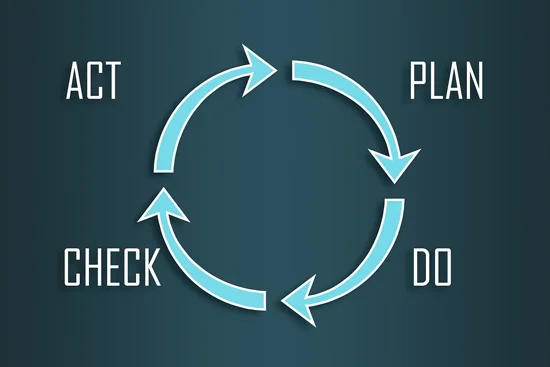
The international standard ISO 9001 defines requirements for a quality management system (QMS).
If an audit is not passed, it usually means that serious nonconformities—so-called major nonconformities—have been identified.
A distinction is made between minor and major nonconformities depending on the severity, relevance, and importance of specific requirements.
- Minor nonconformities: Individual requirements are not fully met, but the system is generally effective. A common example is a missing signature on a test report or an incomplete checklist.
- Major nonconformities: Essential requirements of the standard are not implemented or the quality management system is ineffective in key areas. A typical major nonconformity occurs when documented information is not properly controlled. For example, outdated work instructions are used, changes are not traceable, or no formal approval process exists.
A “not passed” result is usually caused by one or more major nonconformities that temporarily prevent certification or recertification.
Common reasons for failing an ISO 9001 audit
In practice, similar root causes appear again and again. Particularly common are unclear process descriptions, missing evidence, or poor implementation of documented procedures in day-to-day operations.
Another typical weakness is the lack of involvement of top management (see also "management review). The standard requires active leadership commitment. If strategic goals, quality objectives, or risk management are not clearly managed, this quickly leads to critical findings.
Internal audits are also often underestimated. If they are carried out or documented only superficially, external auditors quickly recognize that the system is not being effectively monitored.
Stay calm: an audit is not a catastrophe
As unpleasant as the result may be, a failed audit does not mean that your company lacks a functioning quality management system. Rather, it indicates that improvements are needed.
What matters now is an objective analysis instead of assigning blame. The audit report provides specific details about nonconformities—this is exactly where the solution begins.
How to deal with major nonconformities
After a failed audit, you are usually given a deadline to implement corrective actions. This period should be used intensively. The key is to identify the root cause of each nonconformity. Not the symptom, but the actual source of the problem must be eliminated. A superficial fix—such as retroactively completing missing documents—is usually not sufficient.
Ask the following questions for each nonconformity:
- Why did this situation occur?
- Was the issue systemic or an isolated case?
- Which processes need to be adjusted?
- How can recurrence be prevented?
Methods such as the 5 Whys analysis or Ishikawa diagrams can provide valuable support here.
Create and document an action plan
A structured action plan is essential. It should clearly define:
- The identified nonconformity
- The root cause
- The planned corrective action
- Responsibilities
- Deadlines
- Evidence of implementation
The more transparent and traceable your approach is, the more convincing it will be during the follow-up audit.
Communication within the company
A common mistake is to discuss the audit result only within the quality management team. In reality, an audit affects the entire organization.
Inform relevant departments openly about the findings. Transparency promotes acceptance and collaboration. At the same time, top management should clearly demonstrate that quality management is a top priority.
A constructive error culture is extremely helpful. Employees should not fear consequences but be encouraged to actively contribute to improvements.
Preparation for the follow-up audit
The follow-up audit is your opportunity to demonstrate that the identified nonconformities have been effectively resolved. It is important not only to implement actions but also to prove their effectiveness.
This means in practice: processes must be lived. It is not enough to create new documents—they must be applied and understood.
Conduct an internal mock audit before the follow-up audit. This allows you to identify weaknesses early and avoid new surprises.
Long-term strategy: strengthening quality management sustainably
A failed audit should be seen as a wake-up call. Use this opportunity to further develop your quality management system strategically.
This particularly includes:
- Stronger involvement of top management
- Effective risk management
- Clear process ownership
- Regular training
- Systematic internal audits
Companies that view quality as part of their corporate culture do not just pass audits—they benefit from them in the long term.
When external support makes sense
Sometimes a failed audit reveals a lack of internal expertise or resources. In such cases, external consulting by a quality management consultant can be beneficial.
An experienced ISO 9001 consultant quickly identifies typical weaknesses and supports systematic optimization. However, it is important that the knowledge is embedded within the company and that long-term dependency on external support is avoided.
PeRoBa Quality Management from Munich – Tailored Quality Management Solutions
Consulting, implementation, audits, and QM tools from a single source
A QM consultant is essential for companies that aim to continuously improve their products and processes. Through targeted analysis, practical measures, and the implementation of continuous improvement (KVP) systems, they ensure that optimizations are efficient, sustainable, and measurable. This enables companies to benefit from higher quality, optimized processes, and satisfied customers.
PeRoBa GmbH Munich is a service provider with many years of experience in quality management, especially in the automotive and mechanical engineering industries. We support companies with all relevant standards (VDA 6.3, IATF 16949, etc.) on the path to certification or recertification. We also work closely with universities and research institutions. Managing director Dr. Scherb, for example, lectures at the Hamburg Distance University (HFH), FOM Munich, and is also a speaker at the TÜV Süd Academy, the Education Institute of the Bavarian Economy, and many other institutions.
We look forward to hearing from you. You can reach us by phone at:
+49 8106 / 230 89 92
(see also contact options)
Quality Management – ISO 9001, VDA 6.3 and IATF 16949 Consulting and Audits – www.peroba.org